Latest Analysis and Commentary
by Robert Williams • October 27, 2026 at 5:00 am
[German] Chancellor Friedrich Merz has made it clear that he wants to end anonymity on the internet. Internet anonymity makes it harder to arrest people for inconvenient speech -- "hate speech" and "insults" -- and Germany's police have been raiding the homes of such internet participants for years. Merz himself has filed hundreds of criminal complaints against ordinary German citizens perceived to have insulted him online, including against a 71-year-old pensioner who committed the unconscionable crime of calling him "Pinocchio" on Facebook.... Meanwhile, in the United Kingdom, the totalitarian strain has become just as strong, if not worse. The government has been making examples of citizens who protest the mass migration, which has been continuing across the UK's open borders. By contrast, the men who were arrested on September 27 for what is believed to have been an Iranian-orchestrated attempted attack on England's RAF Fairford air base, used by U.S. warplanes to carry out strikes on Iran, were all released on bail the next day. [T]he UK government has released more than 70,000 criminals early since 2024 under the Labour government's plan to "combat jail overcrowding." So far, since their release, a third of those released have committed new crimes. One man sexually assaulted a woman the day he was freed. Some of the victims of the criminals released early have fled the country. The room they are eager to make in prisons seems to be for ordinary citizens fed up with how their country is run and had the gall to state it. That is how it works in totalitarian systems. Criminals are freed so that dissidents can take their places. Over three years of pro-Hamas protests inciting violence in the form of calling for a "global intifada" and "intifada revolution is the only solution" on the streets of Britain, not a single protester even came close to that kind of sentencing, even though Hamas is a proscribed terrorist organization in the UK. Protesters who wore the Hamas paraglider symbol or the Hamas headband were convicted of terrorism offenses but discharged by friendly judges and never served any time in prison. It is evidently all right to be carried away by emotion in favor of Hamas' mass slaughter, dismemberment and rape of Jews. The judge even seems to be saying that their view is understandable... When it comes to trying to protect your family from predatory third-world illegal male migrants arriving by the thousands on the shores of your country, that is not all right. This seems to be how the UK "justice" system works. If you support Hamas, a terrorist organization, it is considered either not really support at all, or not to cause "serious harm." Instead, protesting illegal immigration must immediately be punished with unconditional prison sentences. If this is not an example of the state emboldening terrorism, it would be hard to say what is.
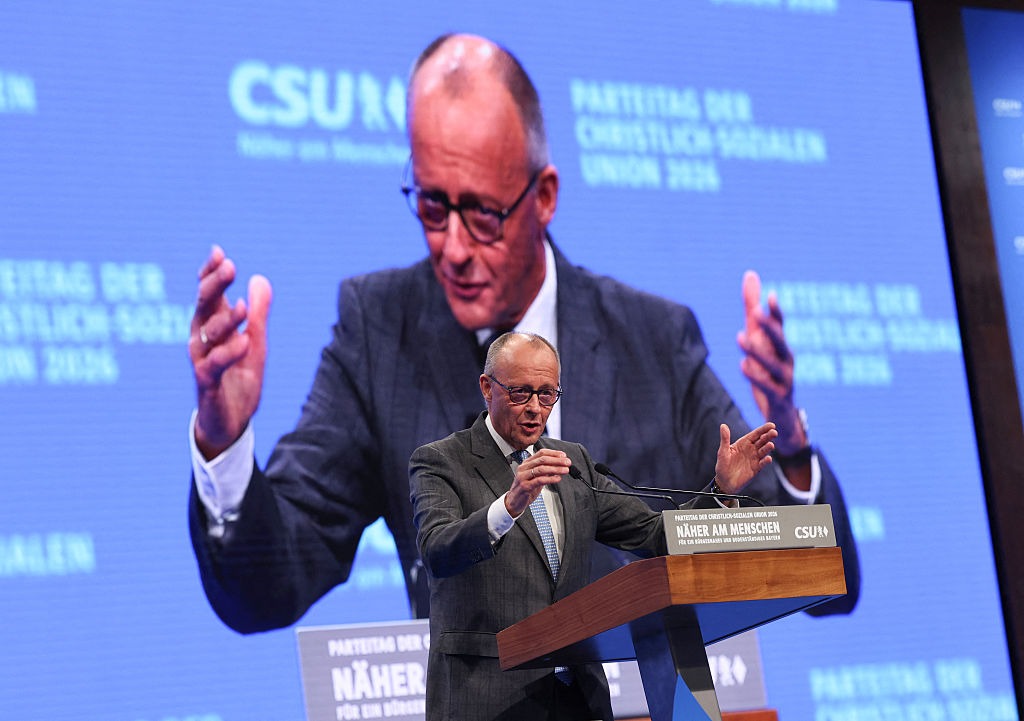
German Chancellor Friedrich Merz has made it clear that he wants to end anonymity on the internet. "I want to see real names on the internet. I want to know who is speaking," he said. In other words, he wants the government, and the big tech companies, to know exactly who is behind every single comment, tweet, and meme on the internet. Pictured: Merz delivers a speech in Munich on October 24, 2026. (Photo by Alexandra Beier/ AFP via Getty Images)
Germany's governing coalition of the Christian Democratic Union (CDU) and Social Democratic Party (SPD), increasingly desperate to cling to power as the Alternative für Deutschland (AfD) continues to hammer them in the polls, is turning ever more totalitarian. For a start, Chancellor Friedrich Merz has made it clear that he wants to end anonymity on the internet. "I want to see real names on the internet. I want to know who is speaking," Merz said back in February. "In politics, we engage in debates in our society using our real names and without visors." In other words, Merz wants the government, and the big tech companies, to know exactly who is behind every single comment, tweet, and meme on the internet.
Continue Reading Article
by Bassam Tawil • October 26, 2026 at 5:00 am
Why should anyone expect peace between the Palestinians and Israel while Palestinian leaders glorify terrorism and armed groups continue to attack Israelis? Above all, how can there ever be peace in the Middle East if the Iranian regime is standing on its feet and supporting the jihad (holy war) to destroy Israel? [A] central obstacle to peace: the continuing willingness of Palestinians to celebrate violence against Israelis while presenting terrorism as supposedly legitimate national resistance. This central obstacle is not all that different from what we are seeing this month in France, as well as Belgium, Italy, Spain, Portugal, Albania and even South Korea, where there virtually are no Palestinians or Jews. Israel is just the pretext. If you think that a Palestinian state, or an election defeat of Israeli Prime Minister Benjamin Netanyahu, or even the disappearance of Israel itself — would solve anything, you would be wrong. What the West is up against is the desire of Muslim extremists, with a leg-up from Marxists, to overthrow the "corrupt" West and replace it with Islamic Sharia law and eventually global caliphate. Only after this transformation will the world have the "peace" part of the "Religion of Peace." Until then, as the founder of the Islamic Republic of Iran, Ayatollah Ruhollah Khomeini, vowed, "there will be struggle" (lit. jihad). These statements, coming from terrorist groups backed by the Iranian regime, reveal a political culture in which murdering Jews is not merely celebrated as an achievement and the terrorists are elevated as national heroes — the same wish holds true for all "infidels" wherever they are. The October 7, 2023, Hamas-led massacre demonstrated the devastating consequences of an extremist Islamist ideology that treats people of other religions, in this instance Jews, as a legitimate target. In Nigeria, Islamists treat Christians as legitimate targets. In India, they treat Hindus as a legitimate target. In France and the West, they treat democratic governance as a legitimate target. It is the same war. A few clearly terrified leaders in the West — in France, Canada, Australia, the United Kingdom, Portugal and Spain — might think that if there were a Palestinian state, it might keep the mob quiet for a while. Yes, until breakfast. That is also why US President Donald Trump should not make a "deal" with the rulers of Iran. Hamas and other likeminded jihadists have no problem murdering civilians — whether in the US on 9/11, the London transit system, the Barcelona and Madrid attacks, Paris's Bataclan Theater, Nice on Bastille Day, German Christmas Markets, the Manchester concert or anywhere else. They are convinced they will be rewarded for it, not just by European politicians in this life, but by Allah in the next — so that no matter how many babies or elderly people they kill torture or mutilate, it is all good. Iran's regime has recently slaughtered more than 36,500 of its own citizens, and continues to kill — so why should they care if they inflict the same horrors on anyone else? Palestinian factions such as Hamas and PIJ, like the protesters throughout the West, continue to regard violence as a source of pride and a means of advancing their primary objective — in Israel, the elimination of the "Zionist entity" (Israel), and in the rest of the world, overthrowing man-made (as opposed to Allah-made) infidel democracies. The silence of the Palestinian Authority — and other Arab and Muslim leaders — is also significant. No public statements condemning the Hebron attack have been issued by Palestinian leaders or representatives or any other Muslim world leader. They object only when it is their territory that is being bombed — which it often is by other Muslims. Israel's countermeasures have indeed caused hardship for local residents. Where, though, is any denunciation of the attacks that caused Israel's security response? The Palestinian people have been put — by their own leaders — in a horrible position of bearing the consequences of terrorist attacks while the Palestinian organizations that praise the attackers present themselves as champions of the people. They are not. Like the ruling butchers of Iran, they are holding the Palestinians and other Muslims hostage. If these captives hope to live, they cannot even protest. The Palestinian Authority is frequently described by Western leaders and governments as a potential partner for peace. The Palestinian Authority is part of the problem; it is not the solution — and wishing it were will not make it so. Its long-standing policy of paying monthly stipends to Palestinian terrorists who murder or wound Jews ("Pay-for-Slay") makes it as rotten as Iran's Palestinian terrorist proxies – Hamas and PIJ, or all the other terrorist groups whether Al-Qaeda, ISIS or Antifa. The international community might begin to understand that peace requires more than diplomatic declarations and initiatives, ceasefires, and promises of Palestinian statehood, especially for self-declared terrorists. Peace requires a total rejection of terrorism, of the people organizing it, of those who carry it out, and it requires a political leadership willing to put the lives and future of ordinary Palestinians — and innocent civilians whoever they are — ahead of the interests of terrorists and of their own incompetent political careers.
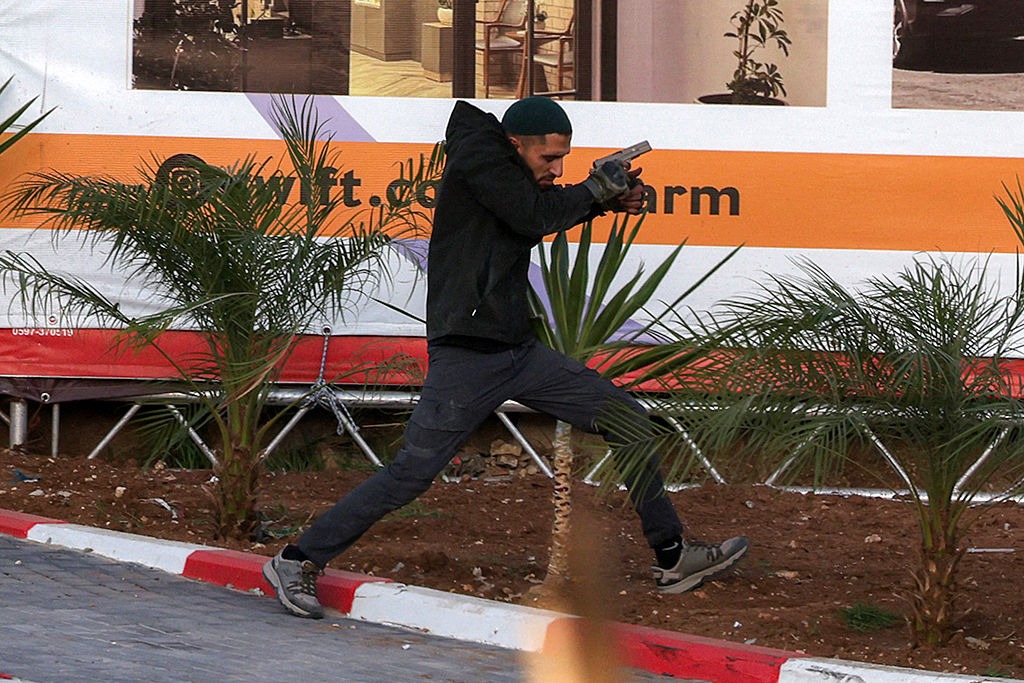
Why should anyone expect peace between the Palestinians and Israel while Palestinian leaders glorify terrorism and armed groups continue to attack Israelis? Pictured: One of the two Palestinian terrorists who attacked Israeli soldiers near Hebron on October 23, 2026. (Photo by Hazem Bader/AFP via Getty Images)
Hamas, Palestinian Islamic Jihad (PIJ), and other Palestinian factions praised the October 23 attack near the West Bank city of Hebron that killed two Israeli soldiers, describing it as heroic, legitimate and necessary. Their reactions raise important questions: Why should anyone expect peace between the Palestinians and Israel while Palestinian leaders glorify terrorism and armed groups continue to attack Israelis? How can anyone even talk about establishing a Palestinian state next to Israel while Palestinian leaders and armed groups "welcome" the killing of Jews? Above all, how can there ever be peace in the Middle East if the Iranian regime is standing on its feet and supporting the jihad (holy war) to destroy Israel?
Continue Reading Article
by Lawrence Kadish • October 26, 2026 at 4:00 am

An MIT report finds that a child can still beat Artificial Intelligence (AI) in learning a language. (Image source: iStock/Getty Images)
An MIT report finds that a child can still beat Artificial Intelligence (AI) in learning a language. There is hope for humanity after all. Their analysis commented that humans have used language for at least 100,000 years and then observed, "And in all that time, there has been only one thing in the world that could learn a human language to perfect fluency: a human child." While AI can now spit out complex math solutions in seconds, create videos of startling "reality," and pose hacking threats to our electrical grids, it still has a devil of time learning a language. MIT says the challenge for AI is that "teaching a computer to use human language still requires an inhuman amount of data." Experts say the divide between children and AI has been labeled "the data efficiency gap." The same experts are now trying to figure out how kids can master language while AI is still essentially mute.
Continue Reading Article
by Pierre Rehov • October 25, 2026 at 5:00 am
At the upcoming "summit," there will be photographers, interpreters, handshakes and much talk of peace. One man will apparently have to make do with just the television coverage: Ukrainian President Volodymyr Zelenskyy, whose country Russian forces are still trying to dismember. Putin has a considerable talent for turning a war of his own making into a dispute that others are invited to settle at his convenience. Zelenskyy merely happens to represent the country invaded, Ukraine, after Russia violated the 1994 Budapest Memorandum, in which Russia — and the United States — agreed to respect Ukraine's sovereignty if it forfeited its stockpile of nuclear weapons. Ukraine complied. Russia obviously did not. Why should any upcoming agreement be different? For Putin, diplomacy is already paying off — bigly. On October 16, just before new measures were due to take effect, Trump issued an open-ended waiver covering virtually all the major sanctions and tariffs.... So far, however, there is neither a ceasefire nor the slightest evidence of Russia conceding anything apart from releasing an elderly, ill American schoolteacher, Stephen Hubbard, wrongfully detained in Russia for more than four years. Russia is still holding hostage at least nine more Americans. Meanwhile, Russia is doing its best to make Ukraine's winter miserable. Zelenskyy has proposed a 30-day halt to attacks on Russian refineries in exchange for help defending Ukrainian skies, but says that Washington has offered no encouragement. For people living under the bombardment of Russian missiles, the distinction between a political delay and a logistical one offers little consolation. Putin knows how much time can be consumed by negotiations about negotiations. The Minsk agreements of 2014 and 2015 were followed by years of arguments over implementation, violations and blame. Putin's full-scale invasion of Ukraine in February 2022, in violation of Russia's commitment in the 1994 Budapest Memorandum not to invade Ukraine, however, gave ample evidence of the value he places on his neighbor's sovereignty when it obstructs his ambitions. Any agreement bearing his signature deserves particular scrutiny, preferably before sanctions are lifted or celebrations arranged. NATO's 2024 Washington Summit Declaration described China as a decisive enabler of Russia's war, pointing to Beijing's vast purchases of Russian oil as well as continuing support for China's defense-industrial base. A summit would also confer on China something Beijing has long coveted: recognition as a power entitled to help settle the affairs of Europe. Perhaps Trump is trying to give rewards now in the hope of receiving concessions later. The author of The Art of the Deal should know better. Diplomacy could conceivably be helpful, but only provided it asks something of the man who started the war. Putin is betting that Trump's determination to secure peace will keep him at the table long after Moscow has stopped offering anything of value. Trump should know about negotiating with men who promise more than they deliver; he should demand evidence before rewarding this one with a diplomatic triumph. The simplest evidence would come from Russian commanders ordered to stop firing at Ukrainian cities. Until then, Putin's invitations deserve all the suspicion his conduct has earned. A seat beside the American and Chinese presidents in Shenzhen would essentially give a mass-murdering KGB goon the prestige of international statesmanship, courtesy of the United States, a country he has spent years trying to threaten.
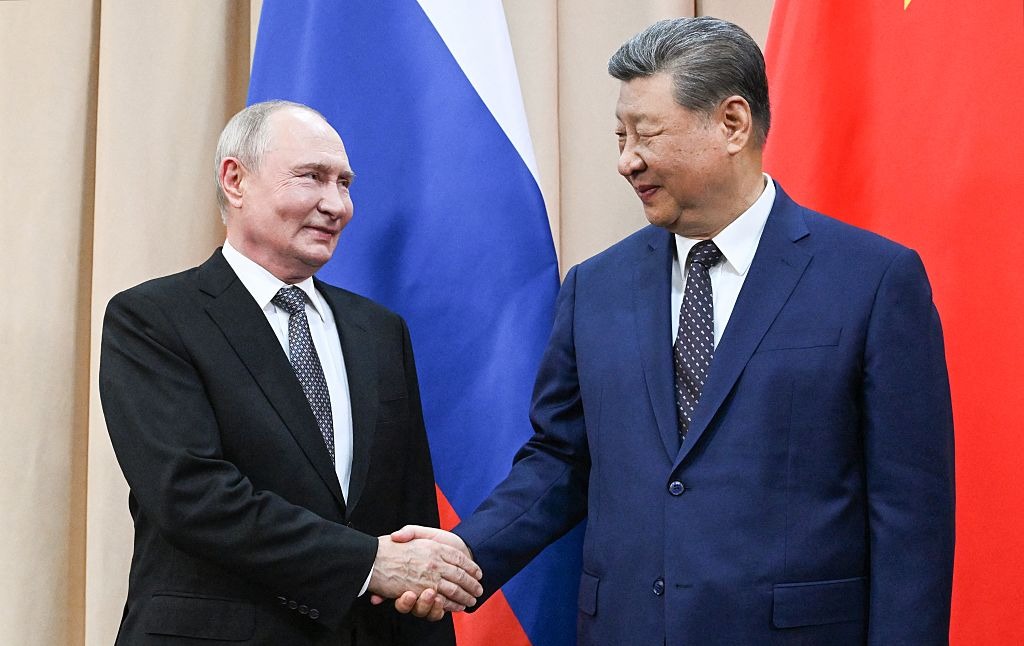
Russian President Vladimir Putin has proposed another meeting with US President Donald Trump, this time with Chinese President Xi Jinping at the table. Pictured: Putin and Xi shake hands during a meeting on the sidelines of the Shanghai Cooperation Organisation summit in Bishkek, Kyrgyzstan on August 31, 2026. (Photo by Kristina Solovyova/Pool/AFP via Getty Images)
Russian President Vladimir Putin has proposed another meeting with US President Donald Trump, this time with Chinese President Xi Jinping at the table. At the upcoming "summit" there will be photographers, interpreters, handshakes and much talk of peace. One man will apparently have to make do with just the television coverage: Ukrainian President Volodymyr Zelenskyy, whose country Russian forces are still trying to dismember. Putin has a considerable talent for turning a war of his own making into a dispute that others are invited to settle at his convenience. Zelenskyy merely happens to represent the country invaded, Ukraine, after Russia violated the 1994 Budapest Memorandum, in which Russia — and the United States — agreed to respect Ukraine's sovereignty if it forfeited its stockpile of nuclear weapons. Ukraine complied. Russia obviously did not. Why should any upcoming agreement be different?
Continue Reading Article
by Majid Rafizadeh • October 24, 2026 at 5:00 am
When you go to vote in ten days, please keep in mind the many doctrines and policies that are not just preferred but required by those who identify with the ideologies of Islam. As someone who grew up in Iran and Syria and experienced these realities, I have seen firsthand people who identify with Islamist Sharia law. Islamists and jihadists do not treat Sharia as one policy preference among many. It is not just their identity; it is what they are committed to advancing as the sole identity for everyone. Their entire sense of self, their purpose in this life, and their belief about the next life depend on implementing Sharia completely. It outweighs everything else. They will die for it. Changing this commitment would mean changing who they are. It is like expecting the Pope to denounce Jesus on Easter or a rabbi to down a pork chop on Yom Kippur — only more — to the zillionth power. Nothing external — prosperity, compromise, or democratic norms — can override it. As we were taught for years and saw with our own eyes, Islamist Sharia law stands in complete contradiction to American values in every major respect. The very reason that the United States grew and became a superpower in technology, the economy, and influence is that its founding values run directly in opposition to Islamist Sharia. Just look at countries taken over by Islamic ideology: Afghanistan, Turkey, Syria, Pakistan, and Iran are clear examples. If someone truly believes in Islamic Sharia law, they must follow it point by point. One of the central points is the rejection of free speech. Just look at Pakistan's blasphemy laws. One can be killed not only for criticizing Islam, Mohammed or Sharia, but even for the suspicion that you might have done so. The slighted questioning of the religion or the rulers who claim to implement Allah's will makes you a blasphemer or an infidel, the punishment for which can be death. In countries where Islamists have taken power, people are imprisoned, tortured, raped and executed for words or online posts. Asia Bibi spent eight years on death row in Pakistan for taking a few sips of water from a well on a hot day, and, because she is Christian, thereby having contaminated it. Supporting people identified with this Sharia means supporting people who do not believe in freedom of speech or, it seems, freedom of much else — especially individual rights. If you are raped you are guilty of committing adultery and can be stoned to death — unless four males who could testify have witnessed the attack! If you are gay, you must be thrown to your death from a high place. Apostasy — leaving Islam — is punishable by death. A person raised in this system is taught that conversion is not a private choice; it is a capital offense. Do you really want someone who genuinely believes that you should not be free to choose your own faith or your own actions and choices holding power over your city, your state, or your country — and seated on intelligence committees? This same ideology holds that men are legally superior to women in inheritance, testimony, and nearly every legal domain. Women are regarded as inferior by doctrine and design. It is astonishing that some self-described, apparently masochistic feminists and women's rights advocates still support policies that so openly abuse them. The policy and priority of those committed to this worldview is not the equal rights, prosperity, health, or livelihood of the American people. Their priority and main policy consist of advancing and imposing their Islamist version of Sharia. That is what they believe earns rewards in this world and the next. Failure to pursue it makes them bad servants of Allah. Few in Iran expected the sudden total transformation that followed the advent of the ayatollahs. Once power was secured, new laws appeared virtually overnight. Similar patterns have already become entrenched in parts of the United Kingdom and Europe. Only occasionally are there calls for countermeasures. They usually amount to nothing -- both out of fear by the leaders of violent opposition on the streets, as seen now in France and as far as South Korea, or out fear of being abandoned at the altar of the ballot box. Going backwards — fast — can happen here too.
When you go to vote in ten days, please keep in mind the many doctrines and policies that are not just preferred but required by those who identify with the ideologies of Islam. (Image source: iStock/Getty Images)
When you go to vote in ten days, please keep in mind the many doctrines and policies that are not just preferred but required by those who identify with the ideologies of Islam. Every election presents a choice between candidates, some of whom may be more supportive of your individual freedoms than others. There are many candidates whose primary loyalty is to the United States: they put America first, seek to improve it, and defend its core constitutional values: freedom of speech and of the press, equal justice under the law, the right to due process, separation of powers, an independent judiciary, the right to keep and bear arms, and the full range of the rights of individuals -- not groups. Those individuals whose identity is bound to an Islamist framework, however, are committed to implementing their version of Sharia law. Unfortunately, this seventh-century version of justice will not improve our country or the West; it will only move them backwards.
Continue Reading Article
by Drieu Godefridi • October 23, 2026 at 5:00 am
These events did not arise in a vacuum. France has long refused to confront three interlocking realities that its political class treats as taboos: mass uncontrolled immigration, the growing presence and separatism of Islam, and the unaffordable costs of the EU's "energy transition." What gives these riots their strength is the role played by La France Insoumise (LFI), Jean-Luc Mélenchon's party, which has for years indulged in toxic pro-Islamist tirades with openly antisemitic undertones. The party seems to know that it will never come to power. It has therefore decided to fully embrace the politics of revolution and disorder, relying on and openly aligning itself with the most extreme elements of France's Muslim population. In many respects, LFI is an openly Islamist party. Not all Muslims, of course, are Islamist. Approximately 60% of young French Muslims, however, believe that Sharia law takes precedence over the laws of the French Republic, according to data from a 2020 official survey, with similar findings reported in subsequent surveys conducted in late 2025. Immigration, Islam, and LFI are not the only factors involved. Insane energy costs compound the social and fiscal pressure. Fuel prices are high enough to revive Yellow Vest-style anger. The government has responded with releases from strategic diesel reserves, price caps, and targeted aid -- not the needed structural reform. The reality is that the French state appears less capable than ever of putting its disastrous finances in order; there is a looming risk of a snowball effect regarding interest on the debt. France has not run a budget surplus since 1974; the structural drivers — high spending, demographic pressures, and refusal to prioritize growth-oriented reforms — remain intact. Meanwhile, France remains locked into its taboos. The demented "energy transition" continues despite the visible cost-of-living backlash. Serious discussion of migration selection, remigration, assimilation requirements, or the cultural and security implications of Islam is still heavily constrained by elite consensus and legal or media norms.
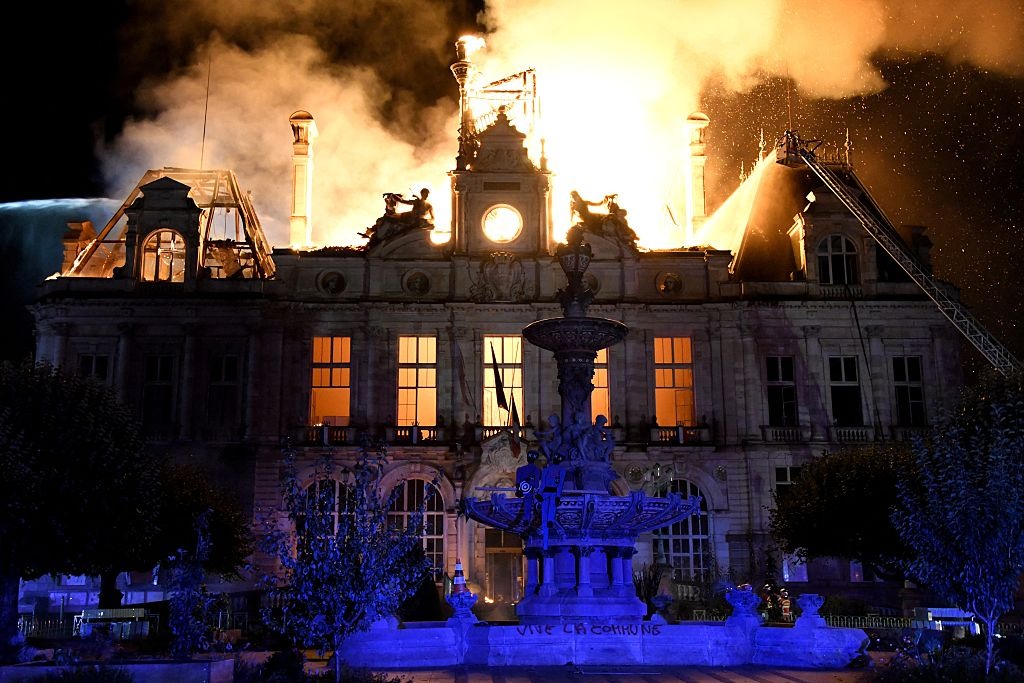
On the night of October 17-18, 2026, France saw some of its worst urban violence in years. The physical damage is extensive. Pictured: The city hall of Limoges, France burns after rioters torched it on October 17, 2026. (Photo by Pascal Lachenaud/AFP via Getty Images)
On the night of October 17-18, 2026, France saw some of its worst urban violence in years. What began as largely peaceful demonstrations over the cost of living, high fuel prices, and the state of public services—especially schools—descended into widespread rioting, arson, and looting across multiple cities. The most established media outlets acknowledge "scenes of war." Interior Minister Laurent Nuñez put the number of participants at roughly 550,000 nationwide (the communist union CGT claimed closer to 800,000), with about 110,000 in Paris. Police made approximately 1,800 arrests, including a record of more than 1,200 in the capital. More than 900 police officers were injured. France's "mostly peaceful protests"
Continue Reading Article
by Khaled Abu Toameh • October 22, 2026 at 5:00 am
The governments said their objective [with the boycotts] is to protect the "two-state solution" and respond to -- presumably meaning prevent -- "settlement expansion." To many Palestinians, of course, all of Israel is one big settlement to be dismantled. As European governments increase economic pressure on Israel, Palestinians working in businesses in the settlements lose their jobs. "Instead of building economic bridges between Israelis and Palestinians, some are choosing to tear them down. Industry creates jobs, stability and hope, while the boycott creates exactly the opposite." — Avraham Novogrotcki, president of the Manufacturers Association of Israel, Ynet, October 18, 2026. For many Palestinians, employment in Israel or Israeli businesses in the West Bank is an important source of income in the Palestinian Authority economy, where opportunities are limited. Do the Canadian and European governments imposing restrictions on Israeli settlements intend to offer these Palestinian workers comparable jobs? Have they established programs to help Palestinian businesses absorb thousands of displaced employees? Have they pledged funds to replace the incomes that may disappear as a result of their policies? Not a bit. There is a precedent for what can happen when an Israeli factory employing Palestinians closes due to a boycott... In 2016, Reuters reported that approximately 500 Palestinian workers had lost their jobs after the [SodaStream] factory's relocation. Nabil Basharat, a father of seven, said he had worked for SodaStream for six years and become a department manager. "I used to make $2,000 a month or more and today I have nothing," he said at the time. Terrorist organizations exploit such grievances by portraying economic hardship as further proof that coexistence and cooperation have failed. The result is greater instability, not progress toward peace. The Europeans at the moment have their own problems with hostile minorities. To garner the votes of these "mostly peaceful protesters," many European leaders are apparently content to trample the Palestinians so long as the Jews can be punished for refusing to accept an openly genocidal bloc into their midst, as the Europeans so foolishly have done. If European leaders genuinely want to improve Palestinian lives, they should... ask whether their restrictions will create new Palestinian jobs, expand Palestinian access to markets, strengthen independent businesses, or improve workers' rights. They should also explain what assistance will be available if factories close and employees are dismissed. Palestinians should not have to pay for Europe's anti-Israel campaigns and policies with their livelihoods.
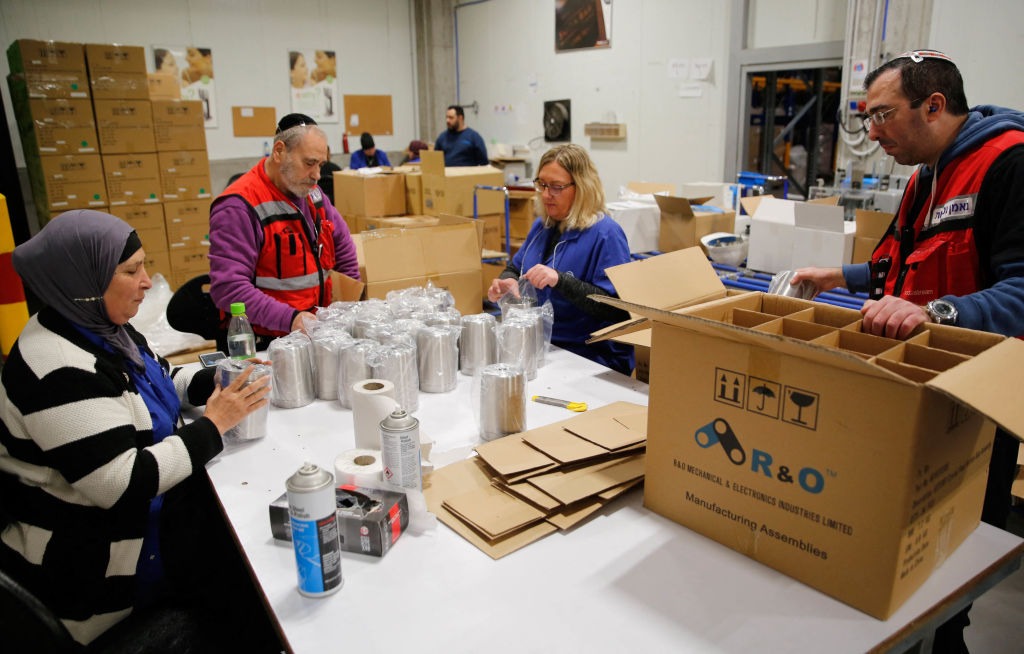
There is a precedent for what can happen when an Israeli factory employing Palestinians closes due to a boycott, when in 2015 SodaStream relocated its factory from the Mishor Adumim industrial zone, and approximately 500 Palestinian workers lost their jobs. Pictured: Jewish and Arab employees work side-by-side at the relocated SodaStream factory in Rahat, Israel, on February 18, 2019. (Photo by Gil Cohen-Magen/AFP via Getty Images)
On September 8, 2026, Canada, Britain, France, Denmark, Finland, Iceland, Ireland, Norway, Poland, Portugal, Spain and Sweden announced their intention to introduce national restrictions on trade with Israeli settlements in the West Bank, support European-level measures, or consider similar action. The governments said their objective is to protect the "two-state solution" and respond to -- presumably meaning prevent -- "settlement expansion." To many Palestinians, of course, all of Israel is one big settlement to be dismantled. Some restrictions are already in force. Ireland's prohibition on importing designated settlement goods took effect on September 15, followed by a Dutch ban on the import, purchase and sale of such goods on September 20. Other countries have announced plans or are considering additional restrictions.
Continue Reading Article
by Gerald M. Steinberg • October 22, 2026 at 4:00 am
[Former Human Rights Watch director Kenneth] Roth filled the NGO with anti-Israel activists. As a result, the principles of universal human rights were widely discredited and reduced to empty slogans. All Israeli responses to mass terror were automatically distorted and demonized as alleged war crimes – no defensive action was considered legitimate. [O]ne core staffer from the Roth era remains very active – associate EU director Claudio Francavilla, who has carried on the rabid anti-Israel rhetoric. Since the October 7, 2023, Hamas atrocities, Francavilla published dozens of posts and replies invoking the false claim of Israel supposedly committing "genocide," when Hamas openly declares its goal of eradicating Israel -- actual genocidal intent. If HRW's board members and funders are serious about reclaiming the once-respected NGO's lost credibility and restoring the universal principles on which it was founded, the very visible antisemitic vitriol and hypocrisy from its associate director in the EU must end.
(Photo by Emma da Silva/AFP via Getty Images)
For three decades, Human Rights Watch (HRW) – under executive director Ken Roth – was transformed from a respected rights group into a leading anti-Israel advocacy organization. Reflecting a deeply personal obsession with portraying Israel as the world's worst violator of human rights, Roth filled the NGO with anti-Israel activists. As a result, the principles of universal human rights were widely discredited and reduced to empty slogans. All Israeli responses to mass terror were automatically distorted and demonized as alleged war crimes – no defensive action was considered legitimate. Of late, HRW's board of directors appears to have moved toward reclaiming some credibility. Roth and many of his hard-core anti-Israel allies are no longer with HRW, and its gratuitous Israel-bashing has decreased, including repetition of the "Gaza genocide" lie.
Continue Reading Article
by Gordon G. Chang • October 21, 2026 at 5:00 am
Whatever the number [of nuclear weapons], everyone agrees that the Chinese regime is rapidly building its arsenal. [The risks] are especially real because China has almost certainly detonated fissile material secretly—and then sought to deceive the international community. Beijing says it stopped testing nuclear weapons in 1996, but it has almost certainly been conducting secret detonations. "After consultations with Director [John] Ratcliffe and his team, they have confirmed to me that the CIA assesses that both Russia and China have conducted super-critical nuclear weapons tests in excess of the U.S. zero-yield standard." — US Senator Tom Cotton, Chair of the Senate Intelligence Committee, X, November 3, 2025. Until China comes clean on its detonations of fissile material, there is no point in talking. Beijing is brazenly lying and therefore refusing to engage with America in good faith.
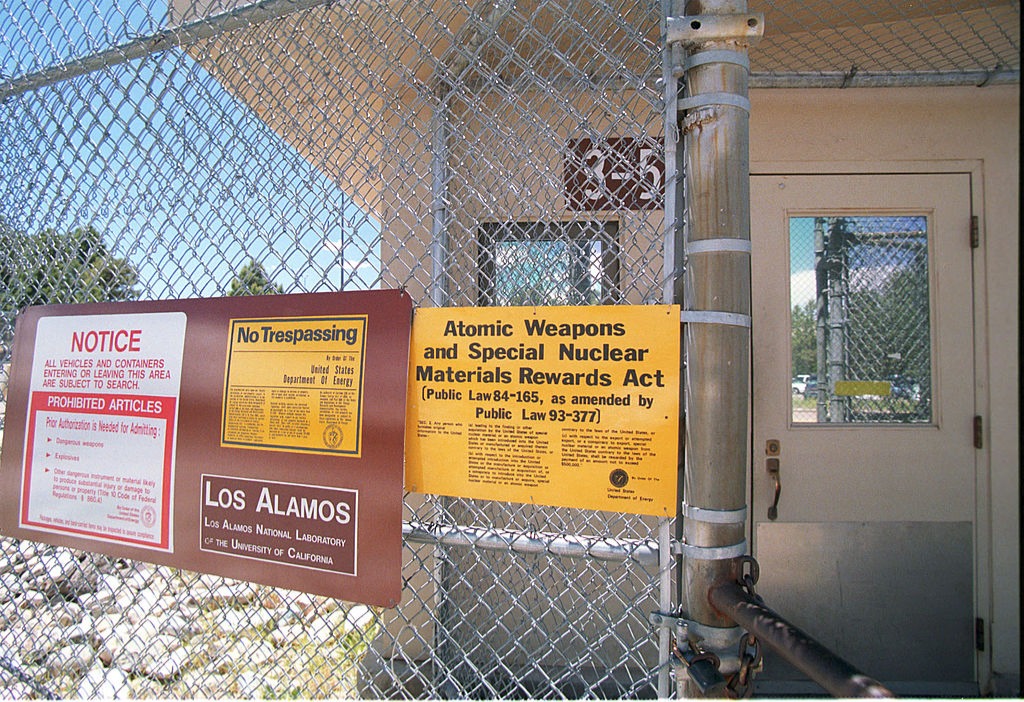
China's proposal to the Trump administration of reciprocal visits to nuclear sites looks suspect, and talks should not proceed until Beijing is ready to engage the United States meaningfully. Pictured: An entrance gate at Los Alamos National Lab Technical Area 18, photographed on June 14, 1999, in New Mexico. (Photo by Joe Raedle/Getty Images)
China's officials this year proposed to the Trump administration reciprocal visits to nuclear sites. Specifically, the Chinese discussed visits to U.S. Department of Energy national labs. The U.S., a source told CNN, "would be open to discussing visits to nuclear testing sites." Unfortunately, China's initiative looks suspect, and talks should not proceed until Beijing is ready to engage the United States meaningfully. Washington has already begun "informal and preliminary" discussions with Beijing. President Donald Trump and Xi Jinping reportedly did not discuss the visits during their talks in Washington last month, but "further lower-level discussions" are expected before the two leaders meet again next month on the sidelines of the Asia-Pacific Economic Cooperation summit in China's Shenzhen.
Continue Reading Article
by Lawrence Kadish • October 21, 2026 at 4:00 am

As we start to pursue our second 250th era, this would be a good time to recognize that energy security is national security. Securing energy abundance through nuclear fusion will be a strategic precondition for global leadership in the coming decades. (Image source: OpenAI)
The fireworks have faded. The paradegoers have gone home. The red, white and blue bunting will be taken down by the end of the month. The 250th anniversary of our nation's founding has come and gone. What now? This historic milestone should not be viewed as a celebration to conclude by July 5th but as the opening of a national conversation about what America intends to become in the decades and centuries to come. But make no mistake: that future will be determined, in part, by energy. Every American era has been an energy story. Water wheels powered the first mills of the young republic. Coal fueled the railroads and factories of the Gilded Age. Oil powered America's twentieth-century dominance. Electrification transformed daily life for millions of Americans, and our reliable energy grid became the invisible force behind our nation's extraordinary quality of life.
Continue Reading Article
by Nils A. Haug • October 20, 2026 at 5:00 am
Why are France and other parts of Europe going up in flames? No one tried to stop the marauders when they could. Many people, apparently, would rather be conquered by rapists, stabbers, car-rammers and beheaders than be called a racist. There also seems to be a slight confusion about who are actually the racists here: the Westerners who incomprehensibly seem not to appreciate being raped, stabbed, car-rammed or beheaded, or the rioters and those who told them exactly which homes and businesses to smash, loot and burn. By a miraculous coincidence, it seems, not one Muslim shop in Marseille was damaged. As Israeli Prime Minister Benjamin Netanyahu pointed out this week, the Jews have lived on that land for more than 3,000 years. Part of it is actually called Judea. How can you "occupy" land if you are its indigenous people? If anyone is committing ethnic cleansing or genocide -- not just of Israelis, but of all Jews -- it is the Palestinians. Hamas states it quite plainly in its original covenant: "The Day of Judgement will not come about until Moslems fight the Jews (killing the Jews), when the Jew will hide behind stones and trees. The stones and trees will say O Moslems, O Abdulla, there is a Jew behind me, come and kill him." – Hamas Covenant, Article 7, 1988. At the same time, the UK refuses to proscribe a real terrorist group backed by Iran, the Houthis, who are causing immeasurable havoc in the Red Sea. The incongruity of the UK's actions of rewarding terrorists while punishing a democracy is a sad reversal of what should be taking place -- for the future of the UK as well. Britain is already seen as no longer belonging to its own people. Now these weak leaders would presumably like to extend the same courtesy to Israel... Hamas leaders have been repeatedly promising to attack Israel "time and again" until it is annihilated -- and Europe as well. Why are Europe's leaders racing to help them achieve that goal? The twelve Western nations promoting these proposals, except for Poland and possibly Iceland, are plagued by social discord from unmitigated migration, particularly from Muslim nations. Muslim claims need to be countered by reality: All of Israel, especially its heartland of Judea and Samaria (the West Bank), belongs to the Jewish people whether by historical right, legal right (the Balfour Declaration), or by continual habitation for more than 3,000 years. Have Muslims been there for 3,000 years? Until the 7th century, Islam did not even exist. By every rubric, Jews are the rightful occupants and legitimate owners of all of Israel's land, not simply bits of it. Other nations have no legal or moral right to interfere in Israel's internal affairs or to tell Israel what to do.... It is no secret that most Western nations -- and probably all of the Muslim world -- would be delighted if Netanyahu ceased to be in a leadership role after the elections. Anyone else would doubtless be more malleable about making sure that Israel could be destroyed. Netanyahu has overcome all foes critically threatening Israel's survival these past years. He is a formidable opponent to those seeking Israel's downfall – which is why they want him gone. Why, then, should the Israelis also want him gone? No sanctions or criticism will ever persuade Israel -- especially after the Hamas massacre of October 7, 2023 -- that it is in Israel's best interests to have a bellicose Palestinian state in its very midst. Every fruit-fly in Israel understands that a Palestinian state would just be a base from which to try to destroy it. Western leaders, instead of vainly seeking to impose on Israel a Palestinian state that is Israel's sworn enemy, might perhaps consider if such a state on their own border is something they might welcome. "We will not be a doormat trampled by an anti-Semitic government, in a country conquered by radical Islam, trying to save itself from economic and social decline by attacking Jews and the State of Israel." — Israeli Finance Minister Bezalel Smotrich, September 8, 2026.
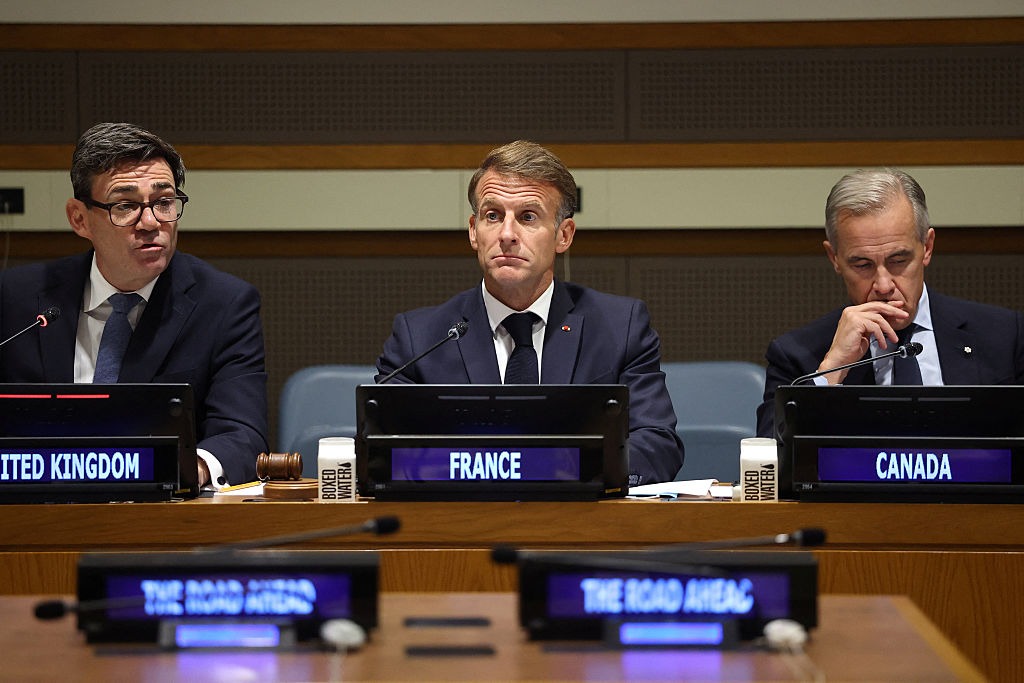
Britain, Canada, and France's proposed "solution" of an Islamic state within Israel's borders – ostensibly in the name of their own "fundamental national interest" -- read re-election by the newcomer voting bloc -- would undoubtedly lead to another disaster like October 7, 2023. Pictured: UK Prime Minister Andy Burnham, French President Emmanuel Macron and Canadian Prime Minister Mark Carney at the UN General Assembly on September 22, 2026. (Photo by Toby Melville/WPA Pool/Getty Images)
Why are France and other parts of Europe going up in flames? No one tried to stop the marauders when they could. Many people, apparently, would rather be conquered by rapists, stabbers, car-rammers and beheaders than be called a racist. There also seems to be a slight confusion about who are actually the racists here: the Westerners who incomprehensibly seem not to appreciate being raped, stabbed, car-rammed or beheaded, or the rioters and those who told them exactly which homes and businesses to smash, loot and burn. By a miraculous coincidence, it seems, not one Muslim shop in Marseille was damaged. "If you think tough men are dangerous," Canadian psychologist Jordan Peterson said, "wait until you see what weak men are capable of."
Continue Reading Article
by Khaled Abu Toameh • October 19, 2026 at 8:30 am
Why is Fatah treating Hamas as a legitimate political partner before the group has demonstrated a willingness to abandon terrorism, surrender its weapons, and relinquish its independent military forces? The question is particularly urgent as the international community seeks to establish a different future for the Gaza Strip, one that would prevent Hamas from restoring its military capabilities and ensure that the territory is no longer controlled by an armed organization. What happens when Hamas refuses to surrender its weapons and accept the authority if a single Palestinian government? The issue... is whether the terrorist organization Hamas should be permitted to retain the weapons and military infrastructure that enable it to impose its will on Palestinians and launch more attacks against Israel, not to mention its own civilians. A general commitment to national dialogue does not establish that Hamas is prepared to disarm, dismantle its military infrastructure, or accept the binding authority of a unified government. Hamas's own account of the Cairo meetings... emphasized the need for elections, which Hamas would no doubt win, and a unified strategy combining political and "field action" against Israel. The phrase "field action" requires clarification. Does "field action" mean peaceful political activity, or does it leave room for armed operations by factions that retain their own weapons and military chains of command? The Palestinians do not need another agreement filled with general declarations whose meaning each faction can interpret according to its own interests. They need clear, verifiable commitments that establish who exercises authority, who controls weapons, and who is responsible for security. A government cannot exercise sovereignty if another organization retains the power to undermine its decisions by force. The Palestinians... do not need another agreement that allows Hamas, an armed Islamist group committed to the destruction of Israel, to retain its weapons while acquiring renewed political legitimacy. The Trump Administration's 20-point Gaza initiative and the Board of Peace have placed questions of security, demilitarization, and Gaza's future governance at the center of the debate. Fatah's negotiations with Hamas should be judged against those objectives, not simply by whether Palestinian factions can reach another "unity" agreement.
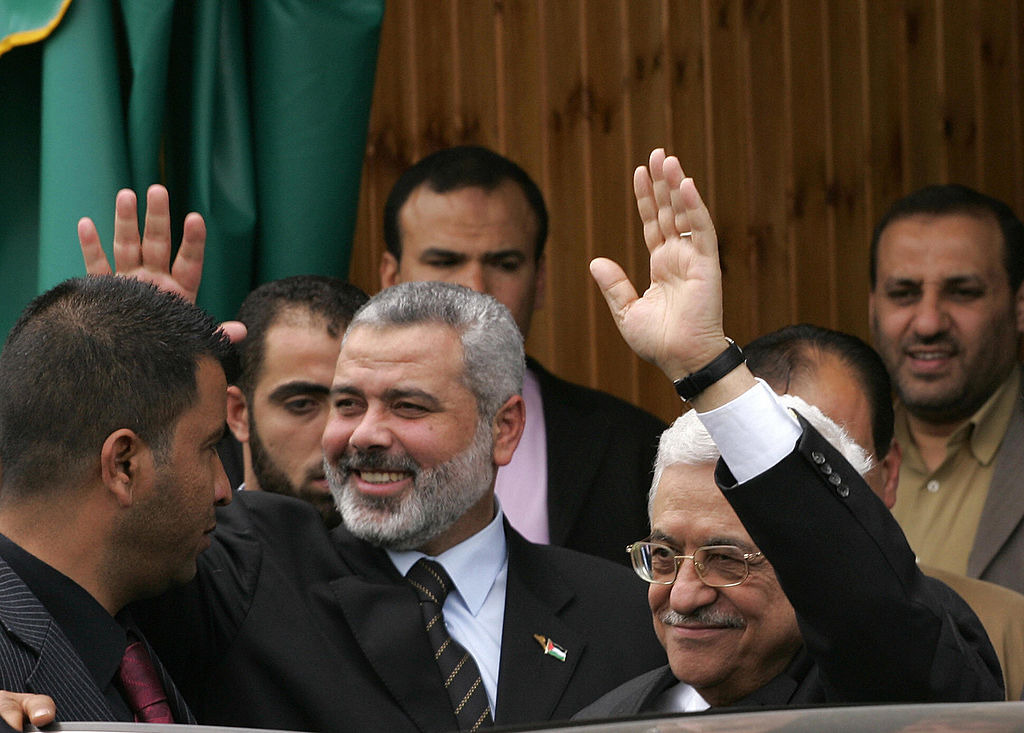
Why is the Palestinian Authority's ruling Fatah faction treating Hamas as a legitimate political partner before the group has demonstrated a willingness to abandon terrorism, surrender its weapons, and relinquish its independent military forces? Pictured: Palestinian Authority President Mahmoud Abbas (R) and the late Hamas leader Ismail Haniyeh in Gaza City, on April 5, 2007. (Photo by Mahmud Hams/AFP via Getty Images)
More than three years after the October 7 massacre, Palestinian Authority President Mahmoud Abbas and his ruling Fatah faction are still pursuing reconciliation with Hamas, the Iran-backed terrorist group that led the assault on Israel. Instead of making Hamas's disarmament and the dismantling of its military infrastructure prerequisites for Palestinian political unity, Fatah officials are traveling to Cairo to negotiate ways of incorporating the terrorist group into a unified Palestinian political system. The latest round of talks, sponsored by Egypt, once again raises a fundamental question: Why is Fatah treating Hamas as a legitimate political partner before the group has demonstrated a willingness to abandon terrorism, surrender its weapons, and relinquish its independent military forces?
Continue Reading Article
by Robert Williams • October 19, 2026 at 5:00 am
Six years later, despite regional wars, those relationships [of the Abraham Accords] endure. The Abraham Accords produced something more valuable than a ceremony: a measurable change in relations between states. That is the standard by which presidential advisers should be judged. Consider Sudan. Its war between Abdel Fattah al-Burhan's regime-aligned Sudan Armed Forces (SAF) and Hemedti's Rapid Support Forces (RSF) has killed and displaced civilians on a staggering scale. Washington sanctioned both commanders, accused the RSF of genocide and the SAF of committing war crimes, and determined that the regime's forces had used chemical weapons. [Senior Advisor to the President for Arab and African Affairs Massad] Boulos has promoted a 90-day humanitarian ceasefire; no durable ceasefire has emerged. Does Boulos have a strategy to prevent Sudan's Red Sea coastline from becoming another arena of Iranian influence? The United States cannot afford an approach that treats every armed faction as an equally acceptable partner simply because each controls territory. Diplomacy must distinguish between temporary contacts and legitimizing forces that threaten long-term security. The reported American proposal [in Libya] envisages a power-sharing arrangement between the Haftar and Dbeibah families, alongside the unification of state institutions and opportunities for American investment in Libya's energy sector. Washington, however, must confront a more fundamental question: How can a genuine national unity government emerge in Libya when one of the negotiating parties operates within a political environment deeply entangled with armed militias, Muslim Brotherhood-linked networks and hardline Islamist factions? [T]he underlying problem remains: Who would actually exercise power inside a supposedly unified Libyan government? Would Washington be helping establish a sovereign state with a unified national army, accountable institutions and civilian authority? Or would it be legitimizing an arrangement in which entrenched political families divide state resources while armed factions and Islamist networks retain influence behind the scenes? How... can [President Trump's] own representatives pursue deals that risk preserving the influence of armed Islamist networks while the president promises to confront them? In Sudan, Yemen and Libya, American national security is too important for strategic ambiguity masquerading as balance. Trump does not need an envoy whose chief asset is proximity to presidential power. He needs results consistent with his stated strategy: stronger allies, weaker terrorist networks, less Iranian influence and durable peace. Kushner had the Abraham Accords. What will Boulos leave behind? The photograph should document a victory — not substitute for one.
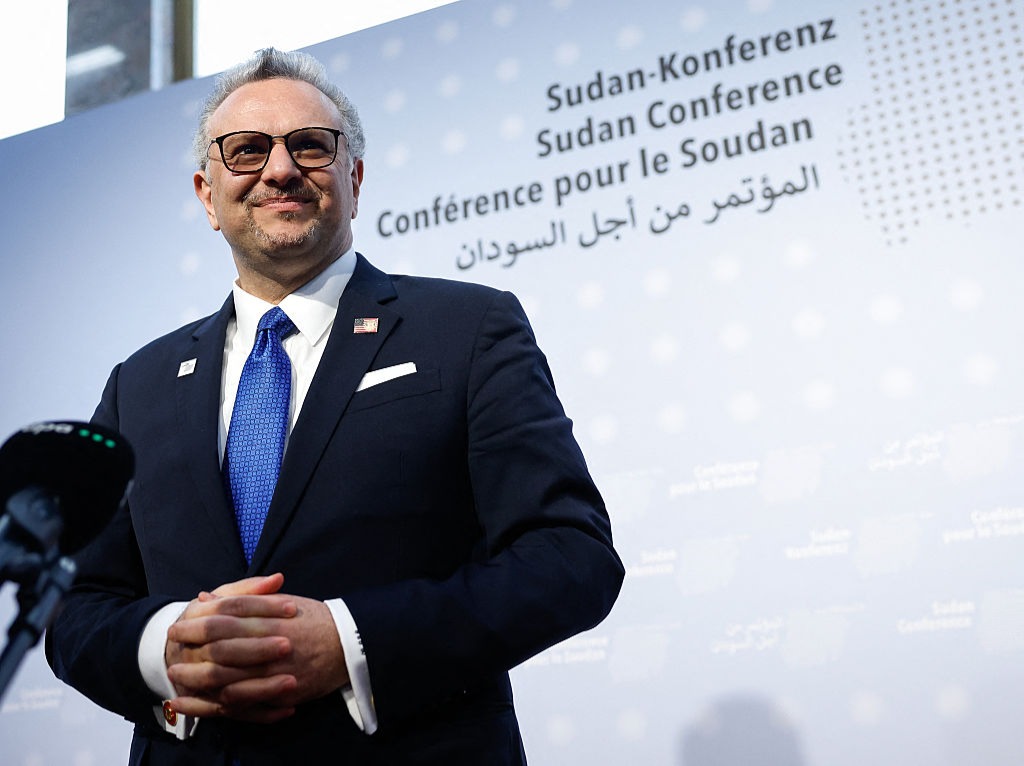
Jared Kushner had the Abraham Accords. What will Massad Boulos (Senior Advisor to the President for Arab and African Affairs) leave behind? The photograph should document a victory — not substitute for one. Pictured: Boulos gives a statement as he arrives to attend the Sudan Conference in Berlin, Germany on April 15, 2026. (Photo by Odd Andersen/AFP via Getty Images)
Two Trump family advisers received extraordinary access to presidential power. One helped change the Middle East. What has the other changed? On September 15, 2020, US President Donald J. Trump hosted the signing of the Abraham Accords. The United Arab Emirates and Bahrain normalized relations with Israel; Morocco followed. Jared Kushner helped translate a strategic opening into diplomatic recognition, trade and security cooperation. Six years later, despite regional wars, those relationships endure. The Abraham Accords produced something more valuable than a ceremony: a measurable change in relations between states. That is the standard by which presidential advisers should be judged. Kushner had a recognizable professional identity long before marrying Ivanka Trump in 2009. He was active in real estate and had acquired The New York Observer in 2006. He was not a trained diplomat, but his public record was identifiable.
Continue Reading Article
by Pierre Rehov • October 18, 2026 at 5:00 am
Al-Sharaa, it appears, is directing most of the state's resources, foreign aid included, toward a large standing army and new weapons systems, while concealing the scale of the effort. Western governments and al-Sharaa do not attach the same meaning to the word "stability." Middle Eastern alignments rarely outlive the enemy that produced them... Iran and its militias spent years fighting the insurgency that carried him to power. None of that says what a stronger Syrian state will do in ten years. In September 2025, al-Sharaa told reporters that a security deal with Israel, modeled on the 1974 disengagement agreement, was a "necessity." A year after he declared this supposed "necessity," al-Sharaa announced at the UN that the Golan Heights "will remain Syrian" – possibly so that Syrians will once again be able to shoot down at Israeli farmers on the plain below. Al-Sharaa added the complaint that "Israel is launching attacks against Syria. There have been 500 air strikes, more than 1,200 incursions, and 300 detentions. This is at odds with the orientation we're seeing at global level." Al-Sharaa, however, forgot to mention why. Ever since al-Sharaa overthrew the Assad regime, Christians, Druze, Alawites and other minorities have been victims of attacks that are reportedly "genocidal" – all while al-Sharaa's plan for the radical Islamization of Syria surges ahead. The Trump administration's removal of Syria from the list of state sponsors of terrorism seems to have been based on wishes rather than any kind of facts on the ground. Perhaps the administration still hopes -- although, after its run-in with Iran, it really should have learned better -- that rewarding good behavior before it takes place will somehow magically cause it to spring into being simply does not work. Gifts in good faith, especially to supposedly former terrorists, can simply get pocketed in expectation of the next ones. At this point, al-Sharaa's demand [that Golan Heights "will remain Syrian"] is tantamount to expecting the United States to return its southwest to Mexico. Israel, evidently motivated by survival, treats its northern frontier as a question of capabilities rather than of declared intentions.... The wager is that investment and honors will pull al-Sharaa toward moderation. It may pay off, but its beneficiary, al-Sharaa, is using part of the proceeds to build an armed power of his own. Israeli security sources concede that a chance to lock in border arrangements was missed when al-Sharaa was weak and newly installed, and now assess that a confrontation is a matter of time. A channel to Damascus has bought Washington influence that isolation never could, but it should not buy amnesia: al-Sharaa's past is documented, his diplomacy is real, and the army now taking shape belongs to the same man. Whether Ahmed al-Sharaa has changed since the world knew him as al-Jolani will occupy biographers. Israel's planners have stopped asking. They are counting his brigades.
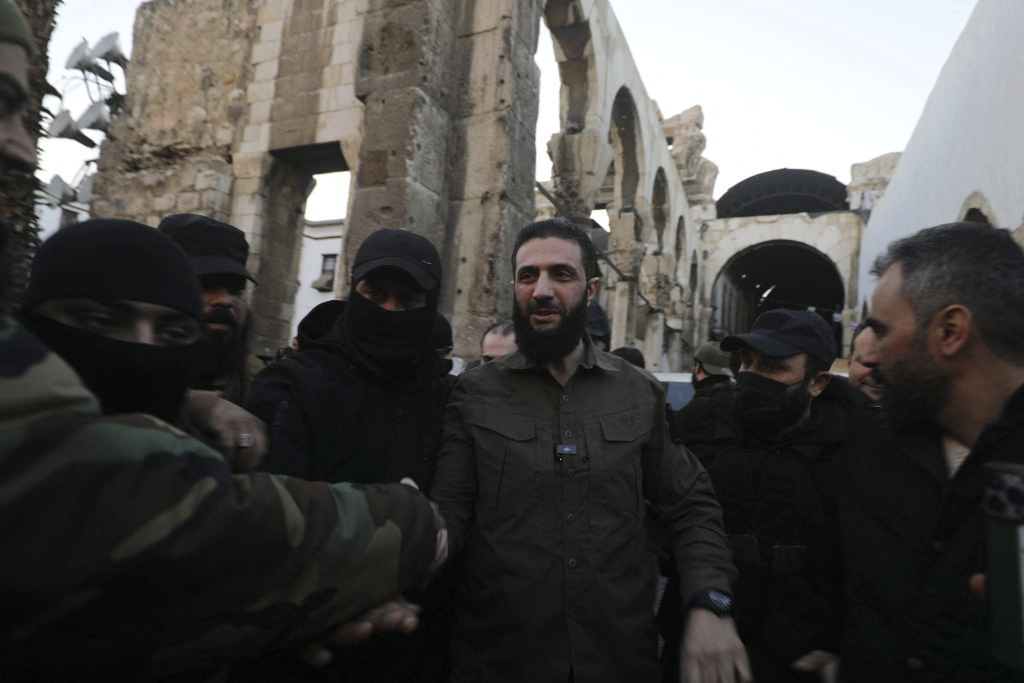
Syrian President Ahmed al-Sharaa, it appears, is directing most of the state's resources, foreign aid included, toward a large standing army and new weapons systems, while concealing the scale of the effort. Pictured: Al-Sharaa is greeted at the Umayyad Mosque in Damascus on December 8, 2024. (Photo by Abdulaziz Ketaz/AFP via Getty Images)
Ahmed al-Sharaa inherited a country in ruins. War halved the size of Syria's economy and left nine people out of ten below the poverty line. According to serious Israeli sources, the priority in Damascus has little to do with reconstruction. Al-Sharaa, it appears, is directing most of the state's resources, foreign aid included, toward a large standing army and new weapons systems, while concealing the scale of the effort. His forces are not yet rated as capable, but they have held brigade-level exercises, are being organized into brigades with divisions to follow, and are seeking air defenses able to restrict the Israeli Air Force. This is the army Israel gutted in December 2024, when 480 strikes in two days destroyed an estimated 80 percent of Assad's strategic arsenal. It is being rebuilt with money meant to rebuild the country.
Continue Reading Article
by Amir Taheri • October 18, 2026 at 4:00 am
In a different context [from nuclear weapons], the "Iran problem" has been defined as "exporting terrorism" with cases concerning over 30 countries –from Kuwait to Argentina, and passing by Turkey, Switzerland and many members of the European Union. To that must be added financial aid, arms and political support that Tehran has given to almost all Palestinian groups fighting Israel not to mention guerrilla outfits in Latin America. The mistake the outside world made was to ignore that transformation [the 1979 Islamic revolution] and continue with the assumption that they were dealing with a normal nation-state with regular interests, aspirations and ambitions of normal nation-states. [M]aintaining the status quo became the unadmitted priority of all players. That means keeping Iran on the wrong train it boarded in 1979 instead of helping it to get off at the first stop. [Iran] cannot change the environment around it while it is incapable of changing itself to suit that environment. It cannot wage war in a meaningful way but is also unable to seek peace.
(Image source: iStock/Getty Images)
"What is the Iran problem that analysts and policymakers often talk about?" This was the question fired at me at a recent brain-storming session with a number of political commentators in London. The short answer is that, depending on who is looking, Iran is made of a cluster of problems.
To some, like successive US administrations, the core of the problem is the current regime's pursuit of nuclear weapons. Never mind that for the past quarter of a century US intelligence services have regularly reported that Iran wasn't doing so, every US president presented "tackling the Iranian nuclear problem" as a priority. Under President Barack Obama that "problem" consumed almost all the four years of John Kerry as Secretary of State. The US wasn't alone in that context. British Foreign Secretary Jack Straw visited Tehran five times to "solve" the "nuclear problem." All German and most French foreign ministers did the same.
Continue Reading Article
|